
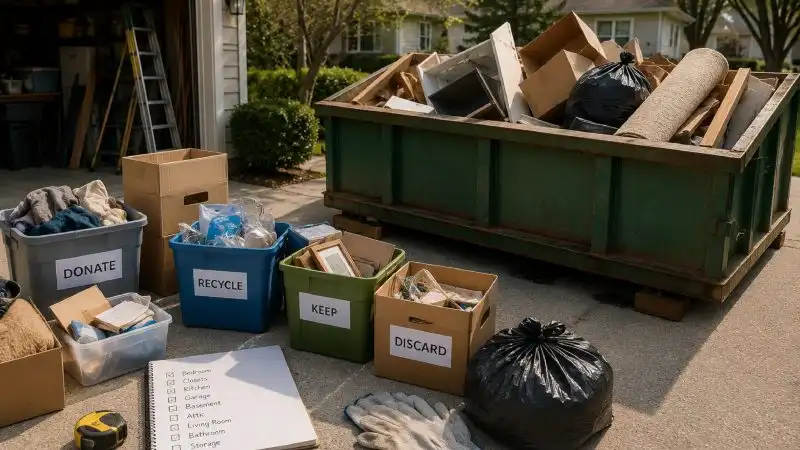
A major decluttering project can produce far more waste than homeowners expect. A few closets may turn into a garage full of broken furniture, old boxes, damaged storage bins, outdated décor, worn rugs, small appliances, and household items that have been moved from room to room for years. Without a disposal plan, the project can stall because unwanted items have nowhere practical to go.
Planning the dumpster rental before the first room is emptied helps the cleanup move in a more organized way. Instead of filling hallways, porches, garages, and driveways with piles, homeowners can create a clear system for sorting, carrying, loading, donating, and discarding items as they work through the house.
Walk Through the Home First
Before scheduling anything, homeowners should walk through the entire property and identify every area that needs attention. This may include bedrooms, closets, bathrooms, the kitchen, garage, basement, attic, laundry room, shed, porch, patio, or storage areas.
The goal is not to count every item. It is to understand the size of the project. A garage cleanout may look manageable until old shelving, broken tools, paint supplies, patio furniture, and storage boxes are included. A basement may hold decades of items that are easy to overlook because they are rarely used.
This walkthrough helps homeowners estimate the amount of debris, identify bulky items, and decide whether the project can be handled in one cleanup push or should be broken into stages.
Decide What Actually Belongs in the Dumpster
A dumpster should not become the first stop for every item in the home. Major decluttering works best when homeowners decide what can be thrown away, donated, recycled, stored, or handled separately.
Broken furniture, worn rugs, unusable household goods, damaged storage bins, old shelving, non-repairable items, and general clutter may be good candidates for disposal. Other items may still have value and should be separated before loading begins.
Homeowners should also identify items that may need special handling, such as electronics, batteries, chemicals, paint, tires, propane tanks, appliances, and other materials that may not belong in a general container. Checking these categories early prevents delays once the cleanup is already underway.
Use Sorting Zones Before Loading
One of the most useful decluttering tips is to sort items before they leave each room. Without sorting zones, homeowners may carry everything outside, then have to dig through piles again to separate donations, trash, recycling, and keepsakes.
Simple zones can work well:
- Keep
- Donate
- Recycle
- Discard
- Review later
The “review later” category should be limited. If it grows too large, it can become a new clutter pile. It is best reserved for personal documents, sentimental items, family photos, heirlooms, and anything that truly needs more thought.
Estimate Volume, Not Just Weight
Decluttering projects usually produce bulky material. Furniture, cushions, plastic bins, boxes, toys, lamps, shelving, rugs, and décor may not be extremely heavy, but they take up space quickly. That makes volume a major planning factor.
A pile of household clutter can look smaller when it is spread across several rooms. Once everything is moved to one disposal area, it may become clear that normal trash pickup will not be enough. Homeowners should think about the number of rooms involved, the size of bulky items, and whether large pieces can be broken down.
For whole-home projects, many homeowners coordinate disposal through Waste Removal USA when the amount of material is too large for regular household trash service. Planning ahead helps prevent unwanted items from sitting around after the sorting work is done.
Choose the Right Placement Area
Dumpster placement should make the project easier, not create new problems. The container should be close enough to the work area to reduce carrying distance but positioned where it does not block daily life.
Driveways are often convenient, but homeowners should think about vehicle access, garage doors, sidewalks, mail delivery, basketball hoops, landscaping, and household entry points. If the cleanup will last several days, the placement area should still allow the home to function.
The surface should be stable and accessible for delivery and pickup. Low branches, tight turns, soft ground, overhead wires, steep slopes, and narrow driveways can all create issues. Choosing the placement area before delivery avoids last-minute confusion.
Plan the Carrying Route
Decluttering is easier when there is a clear path from each work area to the dumpster. Hallways, stairways, doorways, garages, and exterior walkways should be cleared before loading begins.
Homeowners should move shoes, rugs, toys, small furniture, cords, and loose items out of the way. If heavy items need to be carried from upstairs, the route should be wide enough for safe movement. If items are coming from a basement, extra time and help may be needed.
A clear route also protects the home. Carrying broken furniture, dusty bins, and sharp objects through tight spaces can damage walls, doors, railings, and floors if the path is cluttered.
Break Down Bulky Items When Possible
Bulky items can fill a dumpster faster than expected. Old desks, shelves, cabinets, bed frames, entertainment centers, patio furniture, and storage units may take up unnecessary space if loaded whole.
When safe, homeowners can break down large items before loading them. Removing legs, drawers, shelves, cushions, or hardware can make pieces easier to carry and stack. Flattening cardboard boxes and breaking down lightweight shelving can also help conserve space.
Safety still comes first. Items with glass, sharp metal, nails, screws, or unstable pieces should be handled carefully. Gloves, sturdy shoes, and help from another adult can make the work safer.
Load in a Practical Order
The order of loading affects how much can fit. Large, flat items should usually go in first so they can form a base. Heavier items should be kept low. Smaller debris can fill gaps around larger pieces.
Homeowners should avoid creating tall, unstable piles. Items should stay below the fill line, and nothing should hang over the sides. Overloading can create pickup problems and safety concerns.
It also helps to keep donation and recycling items away from the loading area. Once a cleanup gets busy, it is easy for the wrong items to end up in the disposal pile if everything is staged too close together.
Schedule Around Realistic Work Time
Many homeowners underestimate how long major decluttering takes. Sorting decisions, carrying items, breaking down furniture, cleaning each room, and managing donations can take several days or more.
The rental period should match the pace of the project. If the dumpster arrives too early, it may sit unused while homeowners are still deciding what to remove. If it arrives too late, unwanted items may pile up inside the house.
A good approach is to complete basic sorting first, then schedule the container for the active removal phase. For larger homes, it may help to plan by zones: garage and basement first, main living areas next, then closets and final sweep.
Keep Donation Plans Moving
Donation piles can become another version of clutter if they are not handled quickly. Before starting the project, homeowners should decide where usable items will go and when they will be dropped off or picked up.
Clothing, books, small furniture, kitchen items, toys, and décor should be kept clean and separate from disposal debris. Donation items should not be staged near broken materials, dusty boxes, or sharp objects.
Setting a deadline helps. If donation items are still sitting in the garage weeks later, the project is not truly finished.
Do a Final Sweep Before Pickup
Before the dumpster is removed, homeowners should walk through the property one more time. Check closets, cabinets, corners, attic access points, basement shelves, garage walls, under stairs, and outdoor storage areas.
This final sweep often reveals small items missed during the main cleanup. It is also a chance to remove broken bins, empty boxes, damaged organizers, loose hardware, and trash bags left behind.
The final sweep should happen before pickup day, not after. Once the container is gone, leftover debris may become a new disposal problem.
Planning a dumpster rental before a major decluttering project gives homeowners a cleaner, safer, and more efficient way to work through the house. The best results come from walking the property first, sorting items before loading, choosing a practical placement area, clearing carrying routes, and keeping donation or special-handling items separate.
With a clear plan, homeowners can avoid scattered piles and unfinished cleanup zones. The project becomes less about moving clutter around and more about removing it from the home for good. For more information, visit our site daily.