
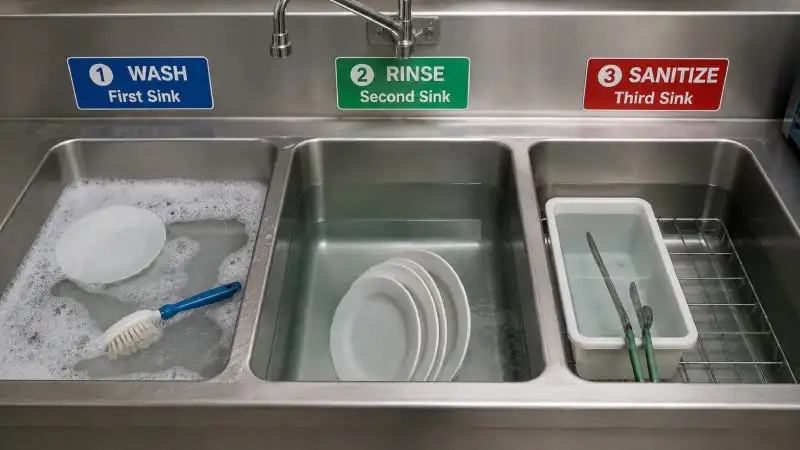
Proper dishwashing plays a major role in food safety. When washing tableware in a three-compartment sink, following the correct process helps remove food debris, eliminate harmful bacteria, and keep dishes safe for use. Whether you work in a restaurant, cafeteria, food truck, or commercial kitchen, understanding the right procedure is essential.
Many food handlers ask about when washing tableware in a three-compartment sink because health inspectors often check this process during inspections. Learning the correct wash, rinse, and sanitize sequence protects customers, reduces contamination risks, and ensures compliance with food safety regulations.
What Does When Washing Tableware in a Three-Compartment Sink Mean?
A three-compartment sink is a standard cleaning system used in commercial food service establishments. Each sink has a specific purpose:
- First compartment: Wash
- Second compartment: Rinse
- Third compartment: Sanitize
This method ensures that dishes, glasses, utensils, and cookware are thoroughly cleaned before they return to service. Skipping any step can leave harmful bacteria behind.
The three-compartment sink remains one of the most effective ways to clean tableware when a commercial dishwasher is unavailable or when manual washing is required.
When Washing Tableware in a Three-Compartment Sink: Step-by-Step Cleaning Process
Following the proper order is the key to safe cleaning.
Step 1: Scrape and Pre-Rinse
Before placing dishes into the sink:
- Scrape leftover food into the trash.
- Remove grease and leftover food particles.
- Pre-soak heavily soiled items if necessary.
This step helps keep the wash water cleaner for longer.
Step 2: Wash the Tableware in the First Sink
Fill the first compartment with:
- Hot water
- Approved dishwashing detergent
Use a brush or scrub pad to clean every surface thoroughly. Pay special attention to forks, knives, and plates with dried food.
Step 3: Rinse in the Second Sink
Fill the second sink with clean, warm water.
Rinse away:
- Soap residue
- Food particles
- Detergent buildup
Clean rinse water prepares dishes for proper sanitizing.
Step 4: Sanitize the Tableware in the Third Sink
The final compartment contains a food-safe sanitizer.
Common sanitizers include:
- Chlorine
- Quaternary ammonium compounds (Quats)
- Iodine
Always follow the manufacturer’s instructions for concentration and contact time.
Sanitizing kills harmful microorganisms that washing alone cannot remove.
Step 5: Air Dry
Place clean dishes on drying racks.
Never:
- Wipe dishes with towels.
- Stack wet plates.
- Store damp utensils.
Air drying prevents bacteria from returning to clean tableware.
Why When Washing Tableware in a Three-Compartment Sink Matters for Food Safety
Every commercial kitchen must reduce the risk of cross-contamination. Proper manual dishwashing protects both customers and employees.
Benefits include:
- Removes grease and food residue
- Eliminates harmful bacteria
- Prevents foodborne illness
- Meets local health department standards
- Extends the life of kitchen equipment
A clean plate is not always a sanitized plate. Both cleaning and sanitizing are necessary.
Understanding the Three Sink Compartments
Each compartment has a different purpose.
| Compartment | Purpose |
|---|---|
| First | Wash with detergent |
| Second | Rinse with clean water |
| Third | Sanitize with approved sanitizer |
Using the compartments in the wrong order reduces cleaning effectiveness.
Recommended Water Temperatures
Proper temperatures improve cleaning performance.
General recommendations include:
- Wash water: Around 110°F (43°C) or as directed by the detergent manufacturer
- Rinse water: Clean warm water
- Sanitizer: Follow the sanitizer manufacturer’s temperature requirements
Always check product labels because sanitizer instructions may vary.
Choosing the Right Sanitizer
Commercial kitchens commonly use three sanitizer types.
Chlorine
Advantages:
- Affordable
- Fast-acting
- Effective against many bacteria
Quaternary Ammonium (Quats)
Advantages:
- Gentle on equipment
- Long-lasting
- Easy to use
Iodine
Advantages:
- Effective sanitizer
- Suitable for many food service operations
Always test sanitizer strength using approved test strips.
Common Mistakes to Avoid
Many food safety violations happen because employees skip important steps.
Avoid these mistakes:
- Washing without scraping food first
- Using dirty rinse water
- Mixing detergent with sanitizer
- Using incorrect sanitizer concentration
- Drying dishes with towels
- Skipping sanitizer contact time
- Overloading the sink
Small mistakes can lead to serious contamination.
Best Practices for Safe Dishwashing
Developing good habits makes cleaning easier.
Follow these best practices:
- Replace the water whenever it becomes dirty.
- Check sanitizer concentration regularly.
- Wash your hands before touching clean dishes.
- Separate clean and dirty tableware.
- Clean and sanitize the sink before each shift begins
- Replace worn scrub brushes.
- Train employees on proper procedures.
Consistency keeps kitchens safe.
Who Should Use a Three-Compartment Sink?
Many food businesses rely on manual dishwashing.
Examples include:
- Restaurants
- Cafes
- Food trucks
- School cafeterias
- Hospitals
- Catering companies
- Churches
- Community kitchens
Any facility that prepares food should understand proper dishwashing procedures.
Health Inspection Tips
Health inspectors often evaluate manual warewashing.
To prepare:
- Keep sanitizer test strips available.
- Label cleaning chemicals.
- Monitor water temperatures.
- Replace dirty wash water.
- Store clean dishes properly.
- Follow the wash-rinse-sanitize sequence every time.
Good habits make inspections much easier.
Frequently Asked Questions
Why can’t I skip the rinse step?
Soap residue can reduce the effectiveness of sanitizers. Rinsing removes detergent before sanitizing.
Can I towel dry dishes?
No. Air drying is the safest method because towels can transfer bacteria.
When Should You Change the Sink Water?
Replace water whenever it becomes dirty or loses effectiveness.
Do I need to test sanitizer strength?
Yes. Test strips help ensure the sanitizer remains within the recommended concentration.
Is manual dishwashing safe?
Yes. When done correctly, a three-compartment sink provides an effective method for cleaning and sanitizing tableware.
Final Thoughts
Following the correct procedure when washing tableware in a three-compartment sink helps maintain food safety, prevent cross-contamination, and comply with health regulations. By washing, rinsing, sanitizing, and air drying every item in the proper order, food service workers can protect customers and maintain a clean, professional kitchen. Consistent training and attention to detail ensure that every piece of tableware is safe and ready for use.
For more informative articles, visit our site daily.